
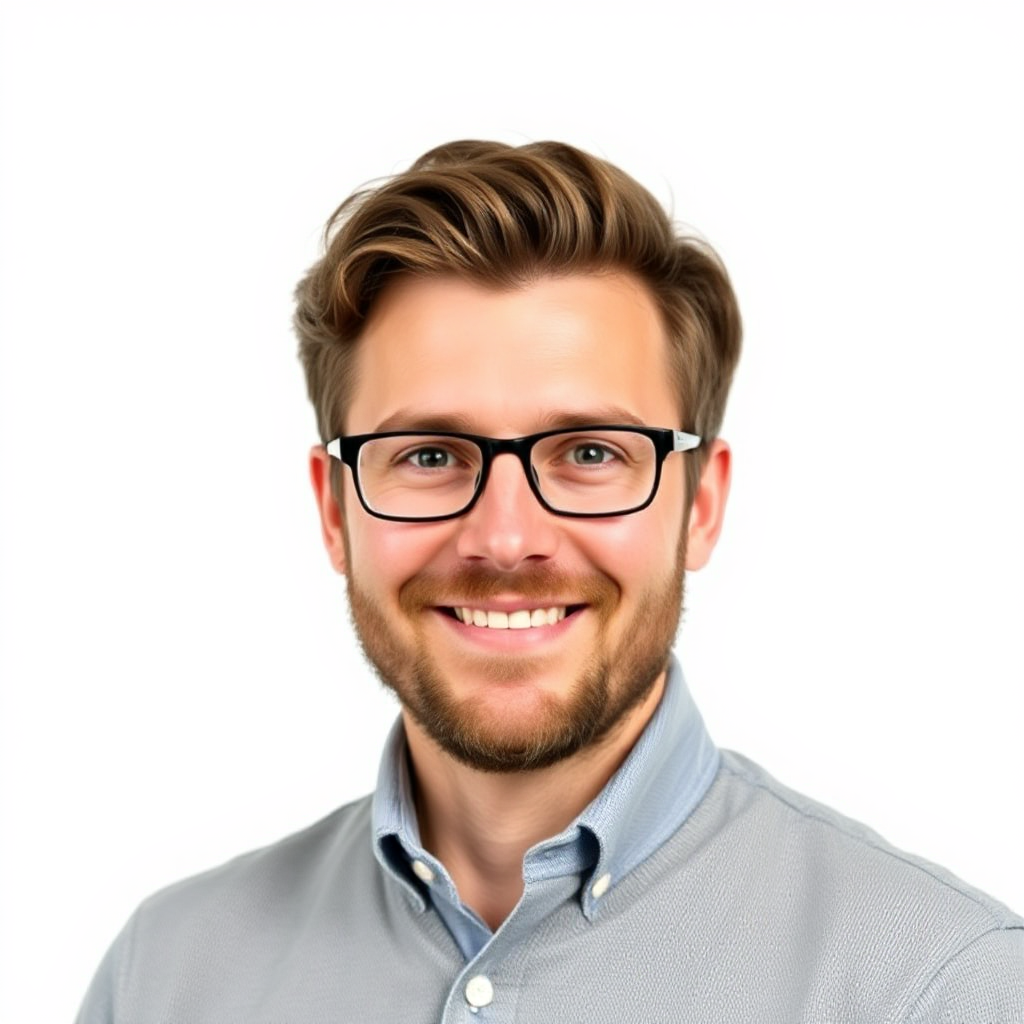
The late US vice-president Dick Cheney, who has died at age 84, was seen as one of the most powerful holders of the vice-presidency in US history. While countless vice-presidents had to settle for minor or figurehead roles, Cheney wielded enormous influence during the term of George W Bush, to such an extent that he was often called as the "actual president".
Bush resented such a characterisation and stated the relationship was more complicated. He observed that Cheney was deferential, always calling him in public settings as Mr President, while he called him as Dick. Bush challenged even descriptions of their association as a collaboration because it suggested that they were peers. In spite of such protestations, Cheney found the relaxed president pliable on a wide array of policy decisions.
The Period Following the Attacks
In charge of a contingent of neo-conservatives that encompassed Pentagon chief Donald Rumsfeld and deputy defence secretary Paul Wolfowitz, he vigorously promoted the military intervention of Iraq in 2003 in answer to the September 11th attacks on New York and Washington. When of the 9/11 attack, Bush had been taking part in a session at a school in Florida. As Bush made his way to a secure location in Nebraska, Cheney took charge, directing the destruction of any non-communicating planes nearing the US Capitol.
Cheney claimed the strikes altered his perspective, causing him to be focused on retaliation. In conjunction with other neo-conservatives, including Rumsfeld and Wolfowitz, he campaigned for a occupation of Afghanistan in an endeavor to apprehend Osama bin Laden. Cheney then pressed fiercely for the invasion of Iraq, even though there was little proof of Saddam Hussein being involved.
Controversial Actions
He expressed no regrets about the armed intervention, in which an estimated 100,000 Iraqis lost their lives, nor about the enhanced interrogation of suspects apprehended after 9/11. He informed CNN in 2015 that the Iraq invasion effort, which was predicated on faulty reports circulated by Cheney, was the correct course of action. "It was the right thing to do back then. I believed it back then and I maintain that stance now."
But even then, there were contrary opinions at a high level about the botched execution of Iraq. One of the government's own delegates to the Middle East, General Anthony Zinni (2001-03), was not reappointed from the position. "I observed, at a minimum," he subsequently stated "obvious failure, negligence, and unaccountability: in the worst case, deception, unfitness, and graft."
Wider Perspective
Cheney was not entirely to blame for the Iraq military action. Prior to 9/11, Wolfowitz had pushed for comparable steps. He had written a memo detailing situations in which American interests might be compromised (including "obtaining vital raw materials, primarily Persian Gulf oil"). Wolfowitz had argued that "America should be prepared to take unilateral action when joint efforts cannot be arranged," specifically referencing armed actions against Iraq.
Bush additionally had entered the White House somewhat determined on implementing what his predecessor had notably declined to do in 1991; overthrow Saddam. After he had been dismissed by the president, the Treasury head Paul O'Neill revealed how, at the opening session of the National Security Council in January 2001, Bush had stated his plan of lowering America's engagement in the Middle East dispute and mooted armed intervention against Iraq.
Bush held a individual resentment against Saddam, convinced he had been responsible for a scheme to kill his father, President George HW Bush, on a journey to Kuwait in 1993. He also disliked that one of the largest hotels in Baghdad had a ground design with a portrait of his father's visage that each person had to tread upon.
Questioning Techniques
Yet it was Cheney who was part of the most outspoken advocating striking Iraq, repeatedly citing information documents that were either weak or completely misleading. He backed what the Bush government politely called as "enhanced interrogation", the application of simulated drowning and torture.
Responding to a Senate report in 2014 that found that no valuable data had been obtained through the harsh techniques, Cheney rejected the conclusions as "full of crap". He informed Fox News: "We requested [the CIA] to establish protocols and create procedures to apprehend the bastards who killed 3,000 of us on 9/11 and guarantee it would not recur. That was specifically what they did and they merit a lot of recognition."
Public Image
Cheney took pleasure in nicknames imposed on him by opponents such as Darth Vader and the dark figure, and by the concept that he was a sinister influence directing Bush. In the author's 2013 volume about the two, Days of Fire: Bush and Cheney in the White House, Cheney is quoted as saying: "Is it me who is the evil genius in the corner that operates invisibly emerge from his domain? This represents a advantageous way to function, actually."
Corporate Connections
Debate over his business interests followed him during his tenure as second-in-command. Even though he had minimal expertise in business but strong connections in defence, particularly in Saudi Arabia, he was invited to join Halliburton, one of the world's biggest petroleum conglomerates, in 1995 as leader and chief executive.
In 2000 he assumed the role of Bush's VP candidate for the presidency. Contentiously, during the military campaign, Halliburton was awarded US deals totaling multiple billions.
It greatly increased his wealth. His yearly compensation during his period at the firm grew from his $258,394 while Pentagon chief to over four million. When he departed in 2000 he had a compensation package worth in excess of $20m|twenty

